 By KEN KORCZAK
Author Felicity Harley leverages legit hard science & Sumerian Mythology to create expansive, mind-blowing science fiction
As I was reading Felicity Harley’s new SF novel, Zero Point Dreams, the 3rd installment of her 5-part grand, expansive science fiction series, a quote from the works of the great literary critic Alexei Panshin kept scratching for attention in my mind. Here it is:
“As a myth, science fiction speaks to those persons who ‘think Western,’ those people who are the product of the logic of Descartes, the Physics of Newton, the encyclopedism of Diderot, the skepticism of Voltaire, the practical experimentation of Franklin, the biology of Darwin, the inventions of Edison, and the revised relativistic physics of Einstein.”
But wait! Panshin also wrote:
“The storytellers of science fiction, having come to recognize the limitations of a world built on scientific materialism, altered their myth and laid down the basis for a new age of higher consciousness.”
Well, Felicity Harley’s style or “brand” of science fiction demonstrates Panshin’s “think Western” concept to a tee.
 Her books are laced with cutting-edge physics, molecular and genetic biology, astronomy, cosmology, mathematics, planetary physics & ecology, astronautics, botany, climate science, materials development, engineering, agronomy, and more … and yet, she cobbles it all together in a fashion that is at once seamless and just flat-out entertaining.
But then, significantly, Ms. Harley deftly incorporates the necessary counterpart to all that hard science with what Panshin referred to as a “new age of higher consciousness.”
Yes, her characters are steeped in the empirical science they need to survive a planet devastated by a catastrophic ecological collapse. They also need it to fight their adversaries and strategize their next chess move within the Machiavellian geo-socio-political-economic “game-of-life” they’ve been forced to play …
… but Harley’s heroic characters also demonstrate a latent recognition or perhaps an imperative to sometimes veer away from left-brain analytical dominance and look toward those subjective, right-brain, nonlinear, holistic aspects that have always been fundamental to humanity.
The latter includes what I’ll call the “anti-matter” of materialistic-empirical science — poetry, music, culinary creativity, sartorial splendor, art, meditation, mythology, dreams, imagination, intuition, empathy for humanity, animals & nature — and not to forget friendship, fellowship, companionship, empathy, and yes, love, just for the sake of love.
Harley sprinkles her narrative with these qualities by including scenes of her techno-science-oriented characters enjoying sweet, spicy or succulent meals, quaffing redolent beverages, selecting stylish modes of dress, engaging in musical creativity, contemplating a profound dream, discussing transcendent concepts, and more — I mean, she makes it seamlessly real, weaving it all into her story by showing, not telling.
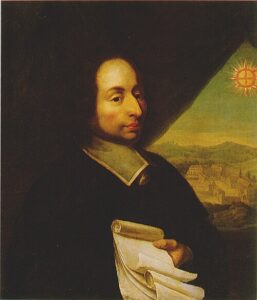
No one summed up this dynamic tension between the analytical and the subjective more brilliantly in a single line than did the 17th-century French philosopher and mathematician Blaise Pascal. In his Pensées, he wrote:
“The heart has its reasons, which reason knows nothing of.”
I’m not sure whether the author consciously intends it or not, but I see Alexei Panshin’s imperative for SF balance and Pascal’s axiom at play throughout her narrative.
Yet another example of this is a wonderful scene in the book where the author sweeps away her treaders to the legendary planet of Nibiru, the home world of the Anunnaki.
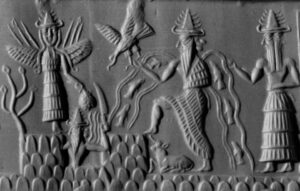
Harley leverages the theories of the controversial scholar and author, Zecharia Sitchin, who proposed that the gods worshiped by the ancient Sumerians were actually technologically advanced extraterrestrials heralding from a hypothetical planet in our solar system called Nibiru.
Harley’s Anunnaki race leans heavily toward scientific empiricism. In general, they eschew concepts of deity and set aside anything that might suggest a higher power or any conceptual framework that is subjective. On planet Nibiru, Enki, a principal Anunnaki figure, explains it this way:
“As a culture, we fully embrace reason. We separate science from what we call the spiritual world … we understand that scientific observation is the basis for knowledge. To deliberately seek out that which is mostly invisible … has never been our intent or desire.”
But then — we learn that Enki’s own wise and powerful father, Anu, has abandoned materialistic empiricism. He has withdrawn to a Zen-like monastery in a remote northern region of Nibiru, where he spends his days in ascetic meditation, seeking an elusive transcendent quality that is undefinable and beyond the limits of a materialistic notion of reality.
Again, this interplay — the dynamic tension between logic and intuition — lurks subtly throughout the narrative.
Before I forget, I must mention that Harley’s description of the environment and civilization of Nibiru is marvelously imagined and thrilling. It imparts that sense of wonder that, for me, only the SF genre can deliver. I felt like I was there!
After all, this is what a lot of folks read science fiction for, right? To escape. We want to be carried away to far-flung, vivid, exotic worlds — to ‘boldly go where no man has gone before’ — so that we can “live” that feeling of what it might be like to visit an alien world with mind-bending scenery, gorgeous landscapes, strange inhabitants, eldritch flora and fauna, and perhaps even a shimmering, gold-infused atmosphere (like Harley’s Nibiru ).
SYNOPSIS AND SUMMARY OF THE SERIES SO FAR
Now I have come to the public service portion of my review, which means I’ll offer a brief synopsis of Zero Point Dreams before I move on to some final thoughts.
This book is the third installment of a five-part, five-book series titled To the Last.
Book 1: THE BURNING YEARS (See my full review HERE)

The series kicks off in the year 2060, a time when our planet is tipping over into a final ecological collapse brought on by global warming gone out of control. Earth’s forests are devastated, plant life is laid waste, most of the animals are dead, and the overheated oceans are devoid of life. Billions of people are dead.
A few thousands of people have survived by moving into vast, high-concept underground dwellings, while others eke out subsistence lives in natural underground locations, such as vast caves or other formations.
The survivors are the remnants of the crème de la crème class of the mega-super wealthy. These are usually technocratic types, along with the brilliant. The latter may not be rich, but their currency is their “brains.” That is, leading-edge scientists, engineers, computer wizards, and the like. A third category might be military and political elites.
An understated irony of the narrative is that technological determinism, driven by greed, a lack of morality, and a failure to anticipate outcomes (or willfully ignoring dire warnings of likely outcomes), is what caused the demise of Earth; yet now, survival and building back a future means doubling down with more of the same. More science, more engineering, more genetic modification, more synthetics, more hard-to-control systems, such as nukes or AI.
But humanity won’t screw it up again this time … right?
Well, ideally, more guardrails will be applied this go around as a chastened survivor population endeavors to rise again like a Phoenix from the ashes of a wasted planet.
Book 2: HOMO DEUS (See my full review HERE)
 Book 2 opens about a generation after the events of Book 1. Here, the narration shifts to an intriguing plot dominated by mythological themes, wherein the ancient gods of Sumer, Babylon, and Egypt re-emerge as something far more real than the mythical status they have been relegated to over the past centuries. The cultural power and influence of hermeticism, mythology, mysticism, and religion have been radically devalued by the Industrial Revolution and Technological Revolution.
However, new information, reinterpretations, and alternative ways of thinking engender a rebirth, of sorts, of the “old gods.” The intriguing thing is that it was hard science itself that made this happen! For example, the ancient Sumerian “god” Ningishzida is proven to have been a genuine figure of history after a brilliant geneticist reconstituted a recovered sample of his DNA and rebirthed him as an ET-human hybrid!
Book 3: ZERO POINT DREAMS
Now in Book 3, about 100 years since the 2060 global collapse, underground cities are growing beyond survival mode and have matured as “new normal,” robust post-disaster societies that are forward-looking but still haunted by the Byzantine sway of the same techno-elites and uber-rich that caused all the trouble in the first place.
Additionally, some remote, near-polar locations of the planet have begun to heal, sprouting nascent plant life, re-emergent animals, and weather tolerable enough to inhabit without donning environmental hazard gear.
But Book 3 is where the author begins to reach further. Harley expands her imagined universe beyond our planet and solar system — opening it up to a cosmical stage for intergalactic adventure — and near the end of the book, she cracks a doorway for interdimensional travel!
SOME FINAL NOTES
–> Harley does an amazing job of incorporating concepts of mind-blowing physics into her narrative. I understand she gets an assist from none other than the legendary theoretical physicist, Dr. Jack Sarfatti, whom she communicates with directly to help her “get the physics right,” or when the physics trends speculative, makes it believably plausible.
–> Although the To the Last series is hard science fiction in the best sense of the genre (such as Clarke, Asimov, and Heinlein), Harley brings a much-needed “feminine quality” to this type of literature, too often lacking. For example, her characters often display emotions of love, caring, and mutual support — they laugh, they cry, they grieve, they hug each other, they support each other — and yes — sometimes they even “talk about their feelings.”
–> I think I forgot to explain why this novel is titled “Zero Point Dreams.” Oh well, a good book review shouldn’t give away everything.
–> The author has an interesting background. Just one example: she is President of the Community Foundation for Saint Vincent and the Grenadines. Find out more about this nonprofit organization here: www.cfsvg.org.
JOIN ME ON BLUESKY: KEN-ON-BLUESKY
NOTE: For more reviews of new science fiction books and UFO books, please see: KEN-ON-MEDIUM